
Home What Happens If You Never Clean Your Gutters? Gutters are designed to collect rainwater from your roof and direct...
Read More
7 Signs You Need New Gutters Instead of Repairs — A South Georgia Homeowner's Guide
Gutter replacement makes more financial sense than repair when the damage is systemic rather than isolated. In Valdosta’s climate — sustained humidity above 70 percent, intense summer rainfall, year-round pine needle accumulation, and occasional tropical storm exposure — gutters deteriorate faster than in moderate climates. The threshold where repair costs exceed replacement value arrives sooner than national home maintenance guides suggest, often by five to eight years.
Recognizing when a gutter system has crossed from “repairable” to “replace” saves money by ending the cycle of incrementally expensive repairs on a system that is approaching total failure. Here are the seven signs that indicate replacement is the better investment for South Georgia homeowners.
1. Multiple Sagging Sections Across the Roofline
A single sagging section is a localized problem — typically a failed hanger, a rotted spot on the fascia, or a section where wet pine needle accumulation exceeded the hanger’s weight capacity. This is a repair, usually $100 to $250 for hanger replacement and resloping.
Multiple sagging sections across different parts of the home tell a different story. When three, four, or five sections are sagging simultaneously on different sides of the house, the problem is systemic. The hangers have collectively reached the end of their effective life, the fascia behind them is compromised in multiple locations, or the gutter material itself has fatigued from years of carrying sustained wet pine needle loads and temperature cycling.
Repairing six to eight sagging sections individually costs $400 to $800 in labor and hardware. Replacing the entire system costs $1,200 to $2,800 and addresses every current and developing problem with new materials, proper hanger spacing at 24 inches, and modern 0.032-gauge aluminum. The replacement addresses every section simultaneously rather than chasing problems from one failing section to the next.
2. Visible Rust or Orange Staining on Gutters
Rust on galvanized steel gutters means the protective zinc coating has failed and active corrosion is consuming the underlying steel. Once the zinc layer is breached, rust accelerates because the exposed steel has no remaining protection against South Georgia’s humidity. Patching a rusted section is temporary because the zinc coating on adjacent sections is degrading at the same rate — the patches will need patches within a year or two.
Orange or brown staining on aluminum gutters indicates a different problem. Aluminum does not rust, but it does corrode through pitting when exposed to tannin-laden standing water from pine needle accumulation. Orange staining on the exterior of aluminum gutters typically means water has been overflowing from the trough and carrying dissolved corrosion products down the front face. The staining is cosmetic, but it indicates internal corrosion that is thinning the aluminum wall at low points in the trough.
3. Separated or Leaking Seams on Sectional Gutters
Sectional gutter joints rely on caulk sealant that degrades in Valdosta’s temperature cycling — summer roof temperatures above 150 degrees followed by winter lows in the low 30s cause the aluminum to expand and contract at each joint, cracking the caulk over three to seven years.
When multiple joints are leaking simultaneously, re-sealing each one costs $75 to $150 per joint. On a sectional system with 20 to 30 joints, selective re-sealing becomes a recurring cycle — fix four joints this year, three different joints next year, five joints the year after. The total cost across three to four cycles of chasing leaks often exceeds the cost of replacing the entire system with seamless gutters that eliminate 80 percent of the joints.
4. Water Staining on Fascia, Soffit, or Exterior Walls
Staining on the fascia board, soffit panels, or exterior wall surface below the gutter line means water has been bypassing the gutter system long enough to cause visible secondary damage. The visible staining is the surface indicator of a deeper problem. Behind the stained fascia, wood rot is almost certainly developing — and in South Georgia’s humidity, rot progresses at approximately 6 to 12 inches per year from the original moisture source.
By the time staining is visible from ground level, the fascia typically needs replacement along with the gutter. Continuing to operate the leaking gutter on rotted fascia accelerates the damage and increases the scope of the eventual repair. The cost-effective approach is to replace the gutter and repair the fascia simultaneously before the rot reaches the rafter tails.
5. Standing Water in Dry Weather
Water visible in the gutter trough two or three days after the last rainfall means the slope has shifted and permanent low points are holding water. Standing water causes three accelerating problems: it corrodes the aluminum through prolonged tannin contact with pine needle debris, it breeds mosquitoes in Lowndes County’s long warm season from March through November, and it adds weight that stresses hangers and causes further sagging — which creates additional low points that hold more water.
Resloping is technically possible as a repair, but if the slope has shifted in multiple locations, the mounting integrity of the entire system is compromised. The hangers have loosened in their screw holes, the fascia has softened around the hanger penetrations, and the gutter material may have permanently deformed at the low points. At this stage, resloping addresses the symptom but not the cause.
6. Gutters Are 5-Inch on a South Georgia Home
Five-inch gutters that were undersized from the day they were installed are not damaged in the traditional sense — they are performing exactly as their capacity allows. The problem is that their capacity is inadequate for Valdosta’s rainfall intensity. No amount of cleaning, repair, hanger adjustment, or guard installation fixes a fundamental sizing problem.
Most homes in the Valdosta subdivisions built between 1990 and 2010 were constructed with 5-inch gutters because that was the national builder standard. The builders were not wrong by national standards — they were wrong for this specific climate. The only solution is replacing the 5-inch system with 6-inch gutters that provide the 67 percent capacity increase needed to handle two-inch-per-hour rainfall without overflow.
7. Age Plus Deferred Maintenance
The combination of a gutter system that is 15 to 20 years old and a maintenance history that includes missed or inconsistent cleanings creates a high probability of hidden internal damage. Aluminum that has held saturated pine needle mats for extended periods year after year develops pitting corrosion at low points that is not visible from outside. The tannin corrosion thins the aluminum wall from the inside, and the weakened metal eventually fails — sometimes as pinhole leaks, sometimes as a section that cracks under the next heavy debris load.
If the gutters are approaching 20 years of age and maintenance has been inconsistent — skipped seasons, years without cleaning, reactive cleaning only after visible overflow — the system is likely more damaged internally than it appears externally. The cost of maintaining it for the remaining few years of its lifespan will exceed the annualized cost of replacement with a new system that resets the clock for another 20 to 30 years.
The 40 Percent Rule for Repair vs Replace
A practical decision threshold: if the repair estimate exceeds 40 percent of the cost of full replacement, choose replacement. The new system solves every current problem, eliminates the maintenance burden of the old system, and begins a new lifecycle with modern materials and specifications.
On a home where replacement costs $2,000, the 40 percent threshold is $800. Any repair estimate above $800 on that home should trigger a replacement conversation. In Valdosta’s climate, a system that needs $800 in repairs today will likely need another $400 to $600 within the next two years as adjacent sections fail — at which point the total repair expenditure exceeds replacement cost and the homeowner has a partially repaired old system rather than a completely new one.
Frequently Asked Questions
How long do gutters last in South Georgia?
Seamless aluminum gutters installed with 0.032-gauge material and maintained with regular cleaning last 20 to 30 years. Builder-grade 0.027 aluminum with deferred cleaning may need replacement as early as 12 to 15 years. Galvanized steel gutters in South Georgia’s humidity last 10 to 15 years before rust-through.
Should I repair or replace my gutters?
Repair if the damage is limited to one or two sections and the rest of the system is structurally sound with intact fascia. Replace if more than 30 percent of the system shows problems, if the gutters are undersized 5-inch systems, if the repair estimate exceeds 40 percent of replacement cost, or if the system is over 15 years old with inconsistent maintenance history.
Can I replace my gutters myself?
Seamless gutter installation requires a portable roll-forming machine that costs $5,000 to $15,000 and professional training. DIY seamless installation is not practical. Sectional gutter DIY installation is technically possible but not recommended in South Georgia due to unstable sandy soil for ladder footing, the difficulty of achieving proper slope, and the higher long-term cost of sectional systems.
What time of year is best for gutter replacement?
Any time of year works in South Georgia — there is no freeze risk that prevents installation, and mild winters allow year-round scheduling. Fall and late winter are the least busy periods for most contractors, which can mean shorter scheduling wait times and occasionally lower pricing.
Does homeowners insurance cover gutter replacement?
Insurance covers gutter damage from sudden events — storms, fallen trees, hail, and wind damage. It does not cover damage from normal aging, deferred maintenance, or gradual deterioration. If gutters were damaged during a specific storm event, document all damage with photographs and file the claim before scheduling replacement work.
How much does gutter replacement cost in Valdosta?
Full gutter replacement including old system removal, fascia inspection and repair, and new 6-inch seamless aluminum installation costs $1,200 to $3,200 for most single-story homes. Two-story homes and complex rooflines run $2,500 to $5,000. Fascia repair is the primary variable that widens the cost range.
Recent Posts
Gutter Installation Mistakes Homeowners Should Avoid
Home Gutter Installation Mistakes Homeowners Should Avoid A new gutter system is supposed to make it easier to control rainwater...
Read More
What Happens When Gutters Are Too Small for Your Roof?
Home What Happens When Gutters Are Too Small for Your Roof? Your gutters need to handle the amount of rainwater...
Read More
How to Tell if Your Gutters Are Properly Installed
Home How to Tell if Your Gutters Are Properly Installed A gutter system can look perfectly fine from the ground...
Read More
Do You Need Gutters on Every Side of Your House?
Home Do You Need Gutters on Every Side of Your House? Not every home necessarily needs gutters on every side...
Read More
How Long Do Gutters Last in Georgia?
Home How Long Do Gutters Last in Georgia? Gutters are an important part of a home’s exterior drainage system. They...
Read More
How to Choose the Right Gutters for Your Valdosta Home
Home How to Choose the Right Gutters for Your Valdosta Home Choosing gutters for your home is about more than...
Read More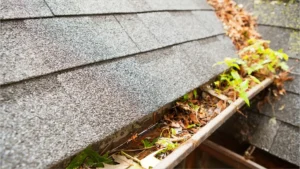
Signs Your Gutters Are Clogged: What Valdosta Homeowners Should Look For
Home Signs Your Gutters Are Clogged: What Valdosta Homeowners Should Look For Gutters are designed to collect rainwater from your...
Read More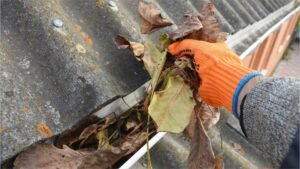
How Much Does Gutter Cleaning Cost in Valdosta, GA?
Home How Much Does Gutter Cleaning Cost in Valdosta, GA? If your gutters are filled with leaves, pine needles, dirt,...
Read More
Seamless Gutters vs. Regular Gutters: Which Is Better for Your Valdosta Home?
Home Seamless Gutters vs. Regular Gutters: Which Is Better for Your Valdosta Home? If you are planning a new gutter...
Read More