How Many Downspouts Does a House Need?
Downspouts are an important part of any gutter system, but they are sometimes overlooked when homeowners are planning gutter installation or replacing an older system.
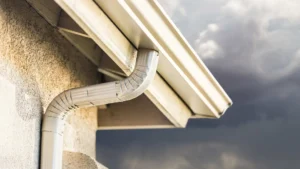
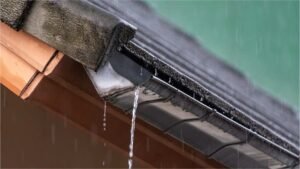
Gutters collect rainwater from the roof, but downspouts are responsible for moving that water out of the gutters and toward an appropriate discharge area. If there are too few downspouts, or if they are poorly positioned, water may move too slowly through the gutter system and eventually overflow.
There is no single number of downspouts that works for every house. The right number depends on the size and layout of the roof, the length of the gutter runs, the amount of water being collected, gutter size, roof valleys, and the configuration of the property.
For homeowners in Valdosta, GA, these factors are particularly important when planning a new gutter system or troubleshooting recurring overflow.
PK Gutters Valdosta provides gutter installation in Valdosta, GA, along with gutter cleaning, gutter repair, gutter replacement, seamless gutters, gutter guards, downspout services, and gutter maintenance.
Call (229) 512-0778 for a free estimate.
Why Do Gutters Need Downspouts?
A gutter without an effective downspout system has nowhere to send the water it collects.
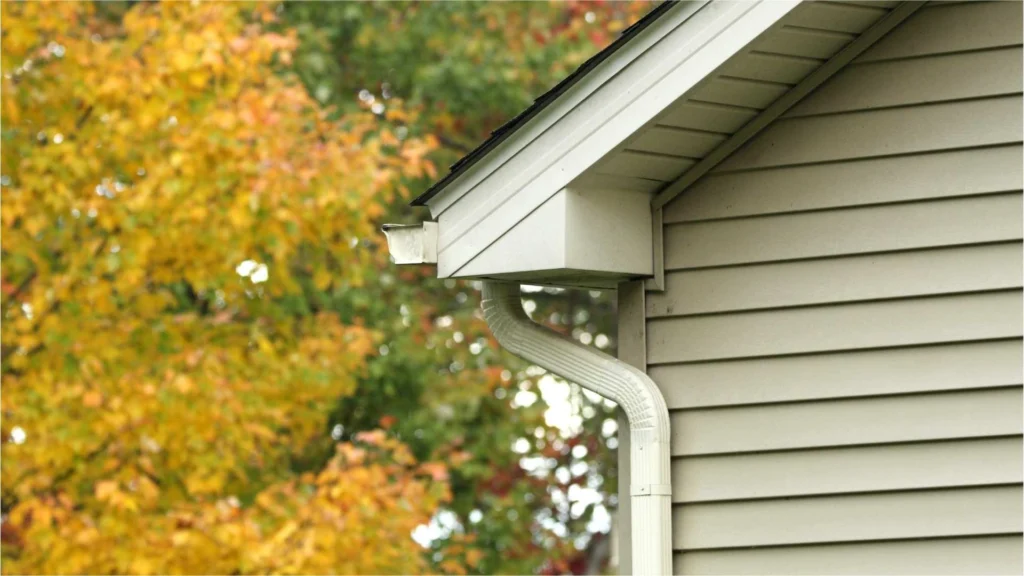
Rain falls onto the roof, flows toward the roof edge, enters the gutter, and then needs to travel toward a downspout. The downspout carries that water downward and away from the gutter.
When the system is properly designed, water can move through the gutters without repeatedly backing up or overflowing.
Downspouts therefore play a major role in the overall performance of a gutter system.
Is There a Standard Number of Downspouts Per House?
There is no universal number that applies to every home.
A small home with relatively short gutter runs may require fewer downspouts than a large home with a complex roof and long gutter sections.
The number should be determined by the gutter layout and the amount of water the system needs to handle.
Rather than asking only how many downspouts a house should have, it is more useful to ask whether the gutter and downspout system has enough capacity for the roof.
What Determines How Many Downspouts You Need?
Several factors should be considered when planning downspout placement.
Roof Size
A larger roof generally collects more rainwater.
As the amount of roof area increases, the gutter system needs to be designed to handle a larger volume of runoff.
Gutter Length
Long gutter runs can collect substantial amounts of water.
If a long section has only one downspout, water may have to travel a significant distance before leaving the gutter.
Additional downspouts can sometimes improve drainage and reduce the amount of water traveling through a single section.
Roof Pitch
Steeper roofs can move water toward the gutters more quickly during rainfall.
The roof pitch should therefore be considered when determining the overall drainage requirements.
Roof Valleys
Roof valleys can concentrate water from two roof sections into one area.
If a downspout or gutter section is located below a roof valley, it may receive significantly more runoff than other sections of the gutter system.
Gutter Size
The gutter itself needs enough capacity for the water it receives.
A larger gutter does not automatically eliminate the need for properly positioned downspouts.
Gutter size and downspout capacity should be considered together.
How Do You Know if You Have Too Few Downspouts?
There are several signs that the downspout configuration may not be adequate.
Repeated overflow is one of the most obvious.
If the gutters are clean but water continues to spill over during heavier rainfall, the drainage configuration should be evaluated.
Other warning signs can include water collecting in the gutters, slow drainage, or overflow occurring repeatedly in the same location.
However, these symptoms can also have other causes, including poor gutter pitch, clogged downspouts, undersized gutters, or concentrated roof runoff.
Can Too Few Downspouts Cause Gutter Overflow?
Yes.
If a gutter system is collecting more water than the available downspouts can effectively move away, water can back up and eventually overflow.
This can be especially noticeable during heavy rainfall.
However, adding downspouts should not be treated as an automatic solution. The entire system should be evaluated first to determine whether the actual problem is downspout capacity, gutter size, pitch, blockage, or another issue.
Where Should Downspouts Be Located?
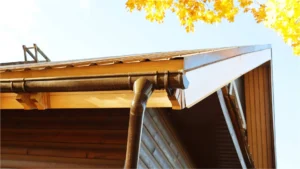
Downspouts should be positioned where they can effectively collect and discharge water from the gutter system.
Their placement depends on the roofline and gutter configuration.
Installers may position downspouts near the ends of gutter runs, at strategic points along longer sections, or near areas receiving concentrated runoff.
The discharge location also matters. Water should be directed toward an appropriate area rather than simply released directly beside the home’s foundation.
Should Downspouts Be Placed at the Ends of Gutters?
They can be.
For some gutter configurations, placing downspouts toward the ends allows water to travel from the center or opposite direction toward the outlet.
But not every home has a simple roofline.
Long runs, corners, roof valleys, and different roof elevations can require a more carefully planned layout.
The best placement depends on how water naturally moves across the roof and through the gutter system.
What Happens When a Downspout Is Too Far Away?
When water has to travel a long distance through a gutter before reaching a downspout, the gutter can carry a larger volume of water along that run.
Depending on the gutter configuration, this may increase the likelihood of overflow during heavy rainfall.
Adding another appropriately positioned downspout can sometimes improve drainage.
The solution should be based on the actual layout rather than simply adding outlets wherever possible.
Can One Downspout Handle a Long Gutter Run?
It depends on the gutter size, roof area, rainfall, and the configuration of the system.
A long gutter run does not automatically require multiple downspouts, but longer runs should be evaluated carefully.
If the system consistently handles normal rainfall but overflows during heavier storms, downspout capacity and placement are worth investigating.
Do 6 Inch Gutters Need Fewer Downspouts?
Not necessarily.
A larger gutter can hold and manage more water, but the water still needs to leave the gutter through the downspouts.
Gutter size and downspout capacity work together.
A 6 inch gutter with inadequate downspout placement can still experience drainage problems.
This is why gutter installation should be designed as a complete system rather than choosing the gutter size separately from the downspouts.
Can You Add Downspouts to Existing Gutters?
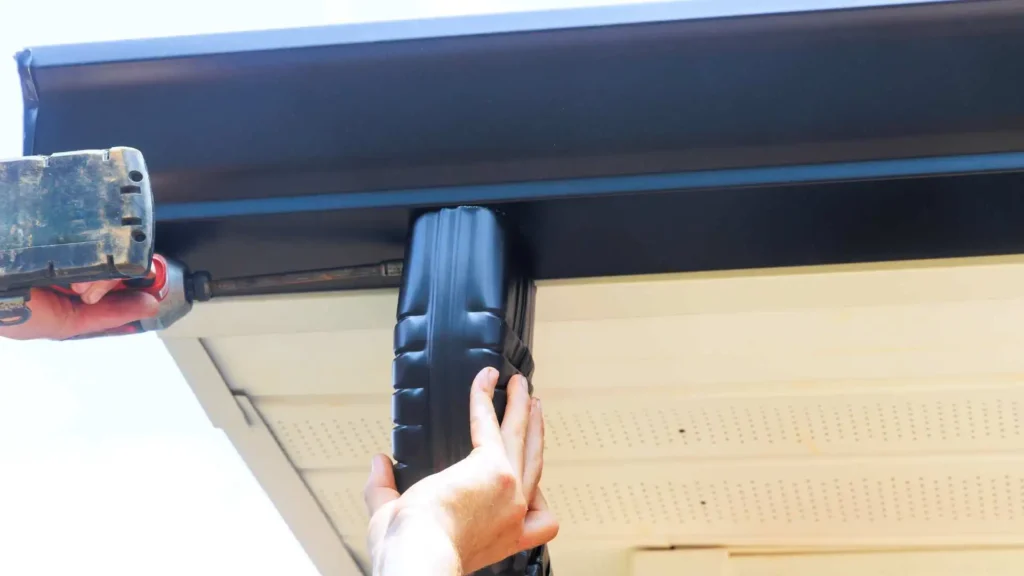
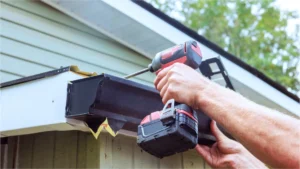
In many situations, additional downspouts can be added to an existing gutter system.
This can be useful when a property has recurring overflow that is related to drainage capacity or downspout placement.
Before adding one, however, it is important to determine whether the downspout is actually the cause of the problem.
If the gutter has poor pitch, severe sagging, or another structural issue, simply adding another downspout may not solve the underlying problem.
PK Gutters Valdosta provides downspout installation and repair in Valdosta, GA.
What If Your Downspouts Are Clogged?
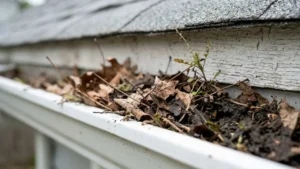
A clogged downspout can create many of the same symptoms as having too few downspouts.
Water may back up into the gutter and eventually overflow.
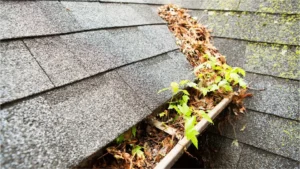
Leaves, pine needles, dirt, and other debris can accumulate inside the system, particularly on properties surrounded by trees.
This is one reason gutter cleaning should include attention to the downspouts rather than focusing only on the horizontal gutter sections.
PK Gutters Valdosta provides gutter cleaning in Valdosta, GA.
Where Should Downspouts Discharge Water?
Downspouts should discharge water into an area where it can move away from the home without creating a drainage problem.
Simply allowing water to pour directly next to the foundation may create unwanted pooling or erosion.
Depending on the property, a downspout may discharge through an extension, drainage system, or another appropriate configuration.
The correct approach depends on the home’s grading and existing drainage.
Do Downspout Extensions Matter?
They can.
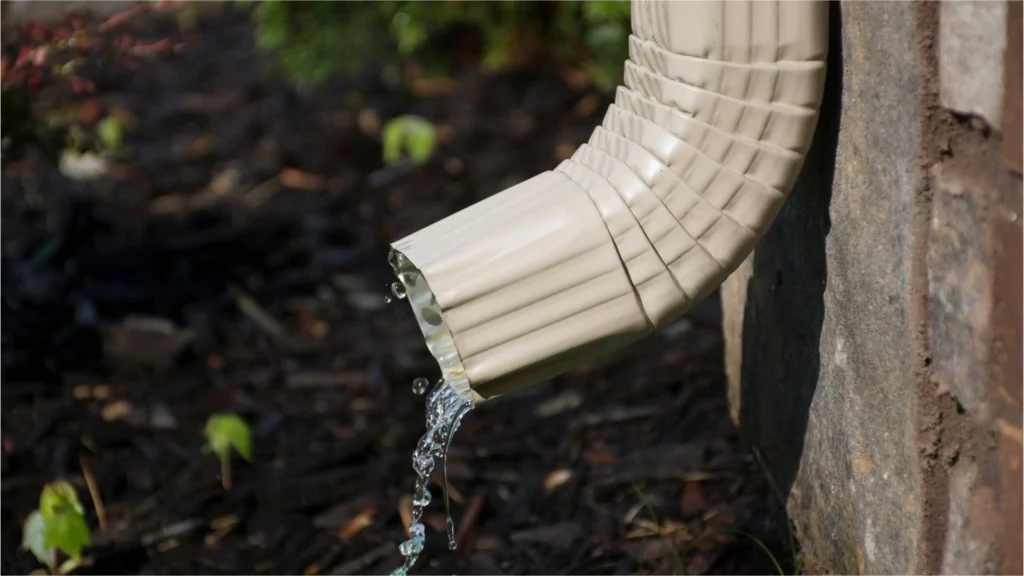
A downspout extension can move water farther away from the foundation and help reduce concentrated discharge immediately beside the home.
The appropriate length and configuration depend on the property.
The goal is to move the water toward an area where it can drain appropriately without creating another problem.
Can Downspouts Help Prevent Foundation Problems?
A properly functioning gutter and downspout system can help direct roof runoff away from the home.
That can be beneficial because uncontrolled water discharged directly beside the foundation can contribute to unwanted moisture and drainage issues.
However, gutters are only one part of a property’s overall drainage system.
Soil conditions, grading, landscaping, drainage systems, and other factors can also affect how water behaves around a home.
How Many Downspouts Does a Large House Need?
A large house may require more downspouts than a smaller property, but square footage alone does not determine the correct number.
The roof shape and gutter layout are equally important.
A large roof with several separate gutter runs may require a different configuration than a similarly sized home with a simple roof design.
Long gutter runs and areas receiving concentrated roof runoff should receive particular attention.
How Many Downspouts Does a Small House Need?
A small home may need fewer downspouts, but again, the correct number depends on the gutter system rather than the home’s overall square footage alone.
Even a relatively small home can have drainage problems if the roof design concentrates water into one section or the downspouts are poorly positioned.
Do Seamless Gutters Need More Downspouts?
Seamless gutters do not inherently require more or fewer downspouts.
The number and placement should be based on the same fundamental considerations as other gutter systems, including roof area, gutter length, roof configuration, rainfall, and drainage requirements.
Seamless construction reduces joints along long gutter runs, but it does not change the basic need to move water efficiently through the system.
PK Gutters Valdosta provides seamless gutters in Valdosta, GA.
Should Downspouts Be Considered During Gutter Installation?
Absolutely.
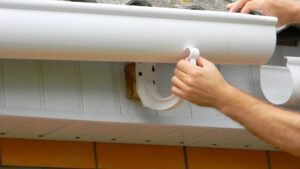
Downspouts should be planned as part of the gutter installation rather than added as an afterthought.
The installer should consider how water moves from the roof into the gutters, how it travels through each gutter run, where it exits through the downspouts, and where that water will ultimately discharge.
A properly planned system can provide more predictable drainage than simply installing gutters along the roofline and deciding on downspouts afterward.
What If Your Gutters Overflow Even With Enough Downspouts?
Having multiple downspouts does not guarantee that the gutter system will never overflow.
Other potential causes include:
- Clogged gutters
- Blocked downspouts
- Undersized gutters
- Poor gutter pitch
- Roof valleys concentrating runoff
- Heavy rainfall
- Damaged or sagging gutters
- Installation problems
If the system continues to overflow, the complete gutter and drainage configuration should be evaluated.
When Should You Add More Downspouts?
Adding downspouts may be worth considering when a gutter system consistently has drainage problems that are related to water volume or outlet capacity.
It can also make sense when a long gutter run has limited drainage points or when a roof section directs substantial runoff into one part of the system.
However, additional downspouts should be part of a broader solution rather than a guess.
Downspouts and Gutter Installation in Valdosta, GA
The right number of downspouts depends on the property.
Roof size, gutter length, roof pitch, valleys, gutter size, rainfall, and the existing drainage configuration all influence the appropriate design.
For a new gutter installation, planning the downspouts at the same time as the gutters can help create a more effective drainage system.
For an existing home, recurring overflow may be a reason to evaluate whether the current downspout layout is adequate.
PK Gutters Valdosta provides gutter installation, seamless gutters, gutter cleaning, gutter repair, gutter replacement, gutter guards, downspout services, and gutter maintenance in Valdosta, GA.
Get a Free Estimate
If your gutters overflow during heavy rain or you are planning a new gutter system, PK Gutters Valdosta can evaluate your gutter and downspout requirements.
Call (229) 512-0778 for a free estimate.
You can also email info@pkguttersvaldosta.com.
Frequently Asked Questions
Request a Free Estimate
Need help with gutter and downspout installation in Valdosta, GA?
PK Gutters Valdosta
Valdosta, GA
Phone: (229) 512-0778
Email: info@pkguttersvaldosta.com
Contact us today for a free gutter installation or downspout estimate.