
Home What Happens If You Never Clean Your Gutters? Gutters are designed to collect rainwater from your roof and direct...
Read More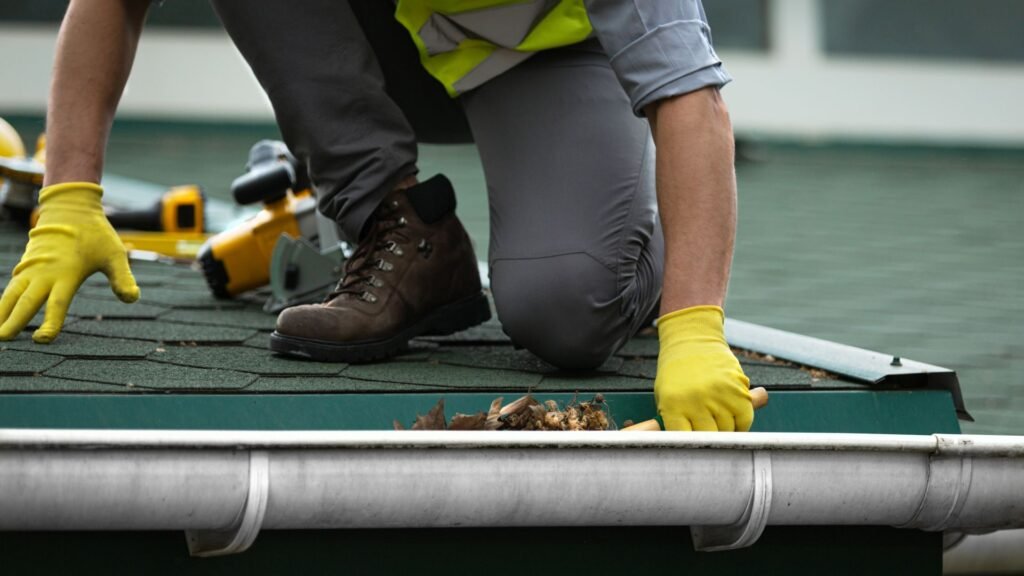
Preparing Your Gutters for Hurricane Season in South Georgia — A Pre-Storm Checklist
South Georgia sits inside the hurricane impact zone. Hurricane Idalia crossed Lowndes County in August 2023 with sustained winds near category 2 strength. Hurricane Michael clipped the region in October 2018 as one of the strongest storms to hit the Florida Panhandle and South Georgia corridor in recorded history. Tropical storm remnants bring sustained heavy rainfall and damaging wind gusts to the Valdosta area multiple times per season, often without the advance warning that named storms receive.
Gutters that are marginally functional in normal conditions fail completely under storm loads. A system with loose hangers, clogged downspouts, and partially rotted fascia survives Tuesday afternoon thunderstorms through luck — the rain ends before the overflow causes visible damage. A tropical system that dumps four to six inches over 12 hours exposes every weakness simultaneously, and the resulting damage compounds over hours rather than minutes.
Preparing gutters before hurricane season — June 1 through November 30 — is one of the lowest-cost, highest-impact steps Valdosta homeowners can take to minimize storm damage. The entire preparation can be completed in an afternoon for a DIY homeowner or scheduled as a single contractor visit. The cost of preparation is measured in hundreds of dollars. The cost of storm damage from unprepared gutters is measured in thousands.
The Pre-Season Inspection Checklist
Complete this checklist by late May, before the June 1 start of hurricane season. Every item can be addressed in a single contractor visit or spread across a weekend for DIY homeowners comfortable working on a ladder.
Clean all gutters and flush all downspouts. A storm-ready gutter system must be at maximum capacity with zero obstruction. Any accumulation of pine needles, pollen residue, shingle granules, or debris reduces the system’s ability to handle peak rainfall. Valdosta’s pine canopy deposits measurable debris within weeks of any cleaning, so timing matters — clean in late May, not early April. A system cleaned six weeks before a July tropical storm has already accumulated enough debris to reduce capacity by 15 to 25 percent.
Flushing downspouts is as important as clearing the trough. Insert a garden hose at full pressure into the top of each downspout and verify water flows freely from the bottom. If flow is reduced or blocked, the downspout has an internal clog — typically a compacted mass of pine needles at the first elbow. Disassemble the elbow to clear the blockage manually. A downspout that is 80 percent clear in normal conditions becomes 100 percent blocked when storm debris washes into the partially obstructed pipe.
Check all hangers and brackets. Walk the full perimeter of the home and inspect the gutter at each hanger location. Look for sections where the gutter has pulled away from the fascia — even a quarter-inch gap indicates a loosening hanger. Look for visible hanger hardware below the gutter lip, which means the hanger has slipped out of position. Look for sag between mounting points, which means the hanger is bending or the fascia behind it is softening.
Loose or weakened hangers will fail under storm conditions. The combination of wind-driven rain adding dynamic pressure to the gutter, debris impact from airborne branches and pine cones, and water weight from rainfall rates exceeding normal capacity creates forces that marginal hangers cannot resist. A hanger that holds a gutter at rest with two inches of standing water will not hold the same gutter when a 60 mph gust pushes against a trough full of four inches of fast-moving water.
Inspect the fascia behind the gutter. Use a screwdriver or awl to probe the fascia board at multiple points along the roofline. Sound wood resists penetration firmly. Soft wood that allows the tool to sink with minimal pressure is rotted and will not hold hanger screws under storm loads. Focus on areas behind gutter joints and miters where slow leaks are most likely to have caused moisture damage, and on the north and east sides of the home where reduced sun exposure slows drying.
Fascia repair before storm season is critical because post-storm contractor availability is measured in weeks, not days. After Hurricane Idalia in 2023, wait times for gutter and exterior work in Lowndes County extended to four to six weeks. Homeowners who had addressed fascia problems before the storm were back to normal within days. Homeowners who hadn’t were waiting in a queue with thousands of others.
Verify downspout connections and extensions. Every downspout should be securely fastened to the wall with straps at minimum every six feet of vertical run. Loose downspouts blow off during high winds, disconnecting the drainage path from the gutter to the ground. When a downspout separates during a storm, the full volume of water from the gutter run dumps directly at the foundation in a concentrated stream.
Downspout extensions should carry water at least four feet from the foundation — six feet on flat lots common in Lake Park, Adel, and the lower-elevation areas of Valdosta. Extensions that have been knocked loose by lawn equipment or shifted by settling should be reconnected and staked. Underground drainage connections should be tested by running water through them to verify the buried pipe is clear.
Confirm slope is correct. Run water through the entire system with a garden hose. Water should flow steadily toward the downspout at every point without pooling. If water pools in any section instead of flowing, the slope has shifted and that section is holding dead weight during rain events. During a storm, pooled water adds to the dynamic load on hangers and can cause a section to pull away from the fascia.
Slope correction involves resetting hanger heights to restore the minimum one-quarter inch of fall per ten feet of run toward the downspout. This is a professional repair — the hangers must be repositioned precisely, and the gutter profile must maintain a consistent line from high point to low point.
Trim overhanging branches. Branches within three to four feet of the gutter line can break in high winds and crash into the gutter, bending or tearing sections. Large limbs can tear entire runs off the fascia. Trimming overhanging branches before storm season removes the most likely source of impact damage.
Pay particular attention to dead branches and weakened limbs in the pine canopy. Live pine branches flex in wind and are less likely to snap. Dead branches are rigid and break under moderate wind loads, dropping directly onto the gutter below.
What to Do During a Storm
During active tropical weather, there is nothing to do with the gutters. Do not go outside during a storm to clear debris or check for damage. Do not climb a ladder during rain or wind. The gutters will handle whatever the storm delivers, or they won’t — and the difference was determined by the preparation completed before the storm arrived.
If the power goes out and the sump pump stops running, water entering the crawlspace from overwhelmed gutters can rise quickly. Know where the sump pump backup power is and have a battery backup or generator plan. This is more relevant for Lakeland and Lake Park properties where the high water table creates immediate crawlspace flooding risk when drainage systems fail.
What to Do After a Storm
After a tropical storm or hurricane passes through South Georgia, inspect the gutter system from the ground before using any ladder. Walk the full perimeter of the home and photograph every visible issue — bent sections, pulled-away runs, dislodged downspouts, debris accumulation, and standing water.
Do not attempt to clean or repair gutters while the ground is saturated. Valdosta’s sandy loam soil becomes unstable when waterlogged, and ladder feet sink unpredictably. Wait at least 24 to 48 hours after the last rain before placing a ladder on the ground. Two-story homes require particular caution because the longer ladder amplifies the instability of soft ground.
Document all visible damage with photographs before touching anything. If the damage is storm-related, it may be covered by homeowners insurance. Photographs taken before any repair work provide the documentation needed for a successful claim. Note the date and time of each photograph, and include wide shots that show the damage in context as well as close-ups of specific damage points.
File the insurance claim before scheduling repairs. The adjuster needs to see the damage in its storm-caused state, not after a contractor has already started work. Scheduling repairs before the adjuster visits can result in a reduced or denied claim. Most insurers in South Georgia are familiar with tropical storm damage claims and process them within two to three weeks.
Prioritize temporary water management over permanent repairs. If a downspout has separated or a gutter section has pulled away, a temporary fix that redirects water away from the foundation is more important than a permanent repair in the first 48 hours. Reattach loose downspouts with temporary straps, position buckets or containers under active leaks, and extend any remaining functional downspouts further from the foundation. The permanent repair can wait for proper scheduling — the foundation protection cannot.
Post-Storm Contractor Availability
After a significant tropical event, contractor availability in South Georgia becomes severely constrained. The demand spike is immediate and intense — every home in the affected area needs roof, gutter, siding, and exterior inspection within the same two-week window.
After Hurricane Idalia in 2023, gutter repair and replacement wait times in Lowndes County extended to four to six weeks. Prices on emergency work increased 20 to 40 percent due to demand. Out-of-area contractors arrived within days, some offering quality work and some offering storm-chasing opportunism at inflated prices.
Pre-season preparation avoids competition for post-storm contractor time. Homeowners who identified and fixed problems in May were back to normal after Idalia within days — a downspout to reattach, some debris to clear, maybe a section to reseat. Homeowners who entered storm season with deferred maintenance needed extensive work at the worst possible time to get it.
Frequently Asked Questions
When should I start preparing my gutters for hurricane season?
Late May. Cleaning, inspection, hanger tightening, fascia probing, and any needed repairs should be completed before June 1. Cleaning too early — March or April — leaves six to eight weeks for pine needle accumulation before the most active storm months.
Will my homeowners insurance cover storm damage to gutters?
Standard homeowners policies cover gutter damage from storms, fallen trees, wind events, and hail. Coverage does not extend to pre-existing damage, normal wear, or deferred maintenance. Document all storm damage with dated photographs and file promptly — most Georgia insurers have 60 to 90-day filing windows for storm claims.
Should I remove my gutters before a hurricane?
Removing gutters before a storm is not recommended and creates more risk than it prevents. Properly installed gutters with 24-inch hanger spacing and secure downspout straps withstand tropical storm conditions. Removing them exposes the fascia to direct rain impact, eliminates all drainage control during the storm, and creates a reinstallation project afterward that costs more than any storm repair would have.
How soon can I get repairs after a major storm?
Post-storm wait times vary by storm severity. After Hurricane Idalia, wait times in Lowndes County reached four to six weeks for non-emergency gutter work. Emergency repairs — active leaks causing interior damage — typically receive faster scheduling. Pre-season preparation is the most effective way to avoid the post-storm queue entirely.
What wind speed can gutters withstand?
Standard residential gutters with hidden hangers at 24-inch spacing and secure fascia attachment withstand sustained winds of 80 to 100 mph under normal conditions. Wider 36-inch hanger spacing, rotted fascia, and loose connections reduce wind resistance significantly. Flying debris can damage any gutter regardless of wind rating.
Should I get a gutter inspection before hurricane season?
A professional gutter inspection before hurricane season costs $75 to $150 and identifies every issue on the checklist above. For homeowners who are not comfortable on a ladder or whose homes have complex rooflines, the inspection cost is trivial compared to the risk of entering storm season with unknown problems.
Recent Posts
Gutter Installation Mistakes Homeowners Should Avoid
Home Gutter Installation Mistakes Homeowners Should Avoid A new gutter system is supposed to make it easier to control rainwater...
Read More
What Happens When Gutters Are Too Small for Your Roof?
Home What Happens When Gutters Are Too Small for Your Roof? Your gutters need to handle the amount of rainwater...
Read More
How to Tell if Your Gutters Are Properly Installed
Home How to Tell if Your Gutters Are Properly Installed A gutter system can look perfectly fine from the ground...
Read More
Do You Need Gutters on Every Side of Your House?
Home Do You Need Gutters on Every Side of Your House? Not every home necessarily needs gutters on every side...
Read More
How Long Do Gutters Last in Georgia?
Home How Long Do Gutters Last in Georgia? Gutters are an important part of a home’s exterior drainage system. They...
Read More
How to Choose the Right Gutters for Your Valdosta Home
Home How to Choose the Right Gutters for Your Valdosta Home Choosing gutters for your home is about more than...
Read More
Signs Your Gutters Are Clogged: What Valdosta Homeowners Should Look For
Home Signs Your Gutters Are Clogged: What Valdosta Homeowners Should Look For Gutters are designed to collect rainwater from your...
Read More
How Much Does Gutter Cleaning Cost in Valdosta, GA?
Home How Much Does Gutter Cleaning Cost in Valdosta, GA? If your gutters are filled with leaves, pine needles, dirt,...
Read More
Seamless Gutters vs. Regular Gutters: Which Is Better for Your Valdosta Home?
Home Seamless Gutters vs. Regular Gutters: Which Is Better for Your Valdosta Home? If you are planning a new gutter...
Read More