
Home What Happens If You Never Clean Your Gutters? Gutters are designed to collect rainwater from your roof and direct...
Read More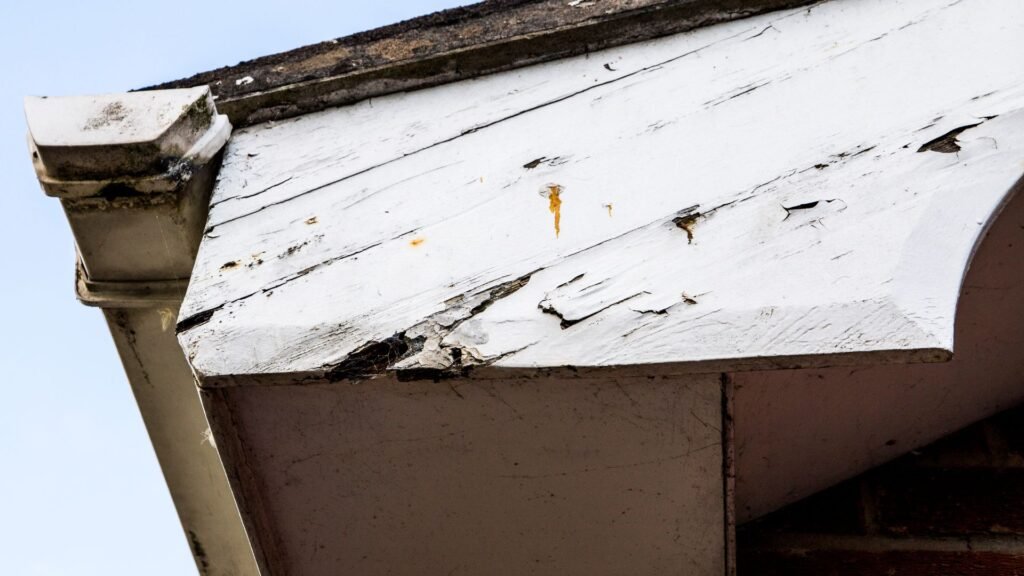
5 Signs Your Fascia Board Is Rotting Behind Your Gutters — What Valdosta Homeowners Need to Know
Fascia rot in South Georgia develops behind the gutter line where it is invisible from ground level until the damage is advanced. The rot starts on the back face of the fascia — the side pressed against the gutter — where moisture from a slow leak or overflow saturates the wood. It spreads inward through the board’s thickness while the front face, protected by paint and exposed to sun, still looks normal from the street.
By the time visible signs appear on the exterior — peeling paint, soft spots, dark staining, or a gutter pulling away — the rot has typically penetrated at least half the board’s thickness and may have reached the rafter tails behind it. At that point, a $400 fascia repair has become a $1,500 to $2,500 structural project that involves removing sections of the roof overhang to replace damaged rafters.
Understanding the early signs helps Valdosta homeowners catch fascia damage while it is still a manageable repair — before it reaches the structural framing that supports the roof edge.
How Fascia Rot Develops in South Georgia
The mechanism is consistent across every home in the region. Functioning gutters protect fascia from moisture. Failing gutters deliver moisture to the fascia with every rain event.
The chain begins with a gutter problem. A leaking joint drips water behind the gutter onto the fascia board. An overflowing gutter sheets water over the front edge and down the fascia face. A sagging section holds standing water against the fascia’s back surface. Any of these gutter failures introduces moisture to the fascia in a concentrated, repeated pattern.
In a dry climate — annual humidity below 50 percent, long dry periods between rain events — the fascia dries between wettings. The moisture content drops below the threshold where wood rot fungi activate, and the damage progresses slowly over many years. A homeowner might get 5 to 10 years of warning before rot becomes structural.
In South Georgia, the drying cycle barely functions. Average humidity exceeds 70 percent year-round, summer humidity frequently exceeds 85 percent, and rain events occur multiple times per week during the June through September storm season. A fascia board wetted by a leaking gutter on Monday has not dried by the time it gets wet again on Wednesday. The moisture content stays permanently above the threshold where wood rot fungi are active — approximately 20 percent moisture content for most softwood species.
Under these conditions, rot progresses at approximately 6 to 12 inches per year from the point of moisture introduction. A single leaking gutter joint can cause fascia rot extending 18 to 36 inches in both directions within two years. Left for four to five years, the rot can span 6 to 10 feet of fascia board from a single leak source.
Sign 1: Peeling or Bubbling Paint on the Fascia
Paint on a healthy fascia board in South Georgia adheres for 7 to 10 years before normal weathering requires repainting. Paint that peels, bubbles, blisters, or flakes within 3 to 4 years of application indicates moisture behind the paint film.
The moisture is coming from one of two sources. The first is a leaking gutter joint or seam directly above the paint failure — water dripping down the back face of the fascia migrates through the wood grain to the front face, saturating the wood behind the paint from the inside out. The second is condensation from saturated wood that has absorbed so much moisture from the gutter side that the wood’s own moisture content exceeds the level that paint can accommodate.
Repainting over peeling fascia without addressing the moisture source wastes the cost of the paint and the labor. The new paint will fail at the same rate as the old because the moisture problem is structural, not cosmetic. The correct sequence is: fix the gutter problem, replace the rotted fascia section, then paint the new wood.
Sign 2: Gutter Pulling Away from the Fascia
Hidden hangers are screwed through the gutter and into the fascia board with screws that penetrate at least one inch into the wood. In sound wood, these screws hold the weight of the gutter, the water flowing through it, and the debris load from pine needles and other accumulation — typically 5 to 15 pounds per linear foot during normal conditions and 30 to 50 pounds per foot when packed with wet pine straw.
When the fascia rots, the wood surrounding the screw loses its structural integrity. The screw can no longer grip — it either pulls straight out under load or strips the rotted wood around its threads. The result is a gutter section that pulls away from the fascia under the weight of water and debris.
If a gutter section pulls away and reattaching it feels like screwing into soft, crumbly material rather than solid wood, the fascia behind it is rotted. Driving a longer screw or adding more screws does not fix the problem — the wood itself has failed and no fastener can create holding power in material that has lost its structural fiber.
Sign 3: Dark Staining or Discoloration Below the Gutter Line
Dark brown or black staining on the fascia below the gutter indicates sustained water contact from a slow leak or overflow above. The discoloration is wood tannin — the same brown compound found in tea and in the pine needle tannins that cause gutter corrosion — leaching out of the saturated wood and staining the paint surface.
Tannin staining is distinct from dirt or mildew. Dirt washes off with pressure washing. Mildew appears as fuzzy green or black spots that scrub away. Tannin staining is a flat, even discoloration that penetrates the paint film and does not respond to surface cleaning because the source is inside the wood, not on the surface.
The staining pattern reveals the leak location. Vertical streaks below a specific point on the gutter indicate a single leak source — typically a joint or miter directly above the stain. Horizontal staining along a longer section indicates overflow from a sagging or clogged section that sheets water across the fascia face.
Sign 4: Visible Gaps at the Roof Edge
Healthy fascia sits flush against the sub-fascia or rafter tails at the roof edge, with the bottom of the shingles or drip edge resting on or just above the top of the fascia board. The fit is tight because the fascia was cut and installed against square, solid framing.
Rotted fascia warps as the wood fibers break down. The board cups, twists, shrinks, or bows away from the framing, creating visible gaps between the fascia and the roof edge. These gaps are visible from ground level as dark lines or shadows along the roofline that should not be there.
The gaps create secondary problems beyond the cosmetic. They allow rainwater to enter the attic space by providing a path around the drip edge. They allow insects — particularly wasps, carpenter bees, and yellow jackets — to access the attic for nesting. They allow small animals — squirrels, mice, and birds — to enter and establish colonies in the attic insulation. An unexplained increase in pest activity near the roofline often traces back to fascia gaps.
Sign 5: Soft Spots When Probed with a Screwdriver
This is the most reliable test and the one that catches rot before any visible sign appears on the exterior. Remove a section of gutter — or have a contractor remove it during a cleaning visit — and press a flathead screwdriver firmly into the exposed fascia board at multiple points along the run.
Sound wood resists penetration firmly. The screwdriver blade may dent the surface but does not sink into the material. Rotted wood allows the blade to sink with minimal pressure — sometimes penetrating an inch or more into material that crumbles rather than resists.
Test at multiple locations. Focus on areas directly behind gutter joints and miters where slow leaks are most likely. Test on the north and east sides of the home where reduced sun exposure slows drying. Test at any location where the gutter has been sagging or pulling away.
The screwdriver test is the only way to assess fascia condition before the damage becomes visible externally. By the time peeling paint, staining, gaps, or pulling gutters appear, the rot has progressed well beyond the initial stage. A proactive screwdriver test during a routine gutter cleaning catches damage at the $400 repair stage rather than the $2,000 structural stage.
How to Prevent Fascia Rot
The prevention chain is direct: functioning gutters keep fascia dry. Fascia stays dry when gutters don’t leak, don’t overflow, and don’t hold standing water against the fascia surface. Every maintenance action that keeps gutters functional — regular cleaning, prompt repair of leaking joints, resloping sagging sections, and gutter guards that prevent overflow — protects the fascia as a secondary benefit.
For new installations and replacements, material choice provides permanent protection regardless of future gutter condition.
Composite fascia boards are manufactured from wood fiber and polymer resin that does not absorb water. Composite cannot rot even when exposed to sustained moisture. It costs $4 to $8 per linear foot versus $2 to $4 for pressure-treated wood, but the zero-maintenance and permanent rot resistance make it the best long-term value for any South Georgia home.
Aluminum fascia wrap covers existing or new wood fascia with a formed aluminum channel that prevents any moisture contact with the wood surface. It costs $5 to $8 per linear foot installed over existing fascia and eliminates the need for painting. Aluminum wrap is typically installed at the same time as new gutters because the gutter must come down to install the wrap.
Pressure-treated wood is the traditional replacement material. It costs less than composite or aluminum but provides limited rot resistance — the treatment slows but does not prevent rot in sustained-moisture environments. In South Georgia’s climate, pressure-treated fascia behind a leaking gutter will eventually rot, just more slowly than untreated wood.
Frequently Asked Questions
How much does fascia repair cost in Valdosta?
Fascia repair costs $8 to $20 per linear foot depending on material choice and damage extent. Most homes need 20 to 60 linear feet replaced, putting typical projects between $400 and $1,200. Projects where rot has reached the rafter tails add $500 to $1,500 for structural framing repair.
Can I repair fascia without replacing the gutters?
Technically possible but not recommended. The gutter must come down to access and assess the fascia. Reinstalling the same gutter — the one that caused the rot — on new fascia restarts the damage cycle. Replacing both simultaneously ensures the new fascia is protected by a properly functioning gutter system.
How fast does fascia rot spread in South Georgia?
Approximately 6 to 12 inches per year from the original moisture source under typical conditions. Left for three to four years, a single leaking gutter joint can cause rot across 3 to 8 feet of fascia board. Shaded locations with reduced airflow — common in Remerton and the tree-heavy neighborhoods near VSU — may progress faster.
Does composite fascia cost more than wood?
Composite costs $4 to $8 per linear foot versus $2 to $4 for pressure-treated wood. The higher cost is offset by zero maintenance, no painting requirement, and permanent moisture resistance. Over a 20-year period, composite costs less to own because it never needs repainting or replacement.
Should I inspect my fascia regularly?
A visual inspection from ground level once per year catches the visible signs — paint problems, staining, gaps, and pulling gutters. A screwdriver probe test whenever gutters are removed for cleaning or repair catches the hidden damage that predates visible symptoms by one to two years.
Can fascia rot spread to the rafters?
If left untreated, fascia rot will eventually reach the rafter tails — the ends of the rafters that extend beyond the wall line to create the roof overhang. Once rot enters the rafter tails, structural repair is required. The rafters must be sistered or replaced, which involves removing sections of roofing material and is significantly more expensive than fascia-only repair.
Recent Posts
Gutter Installation Mistakes Homeowners Should Avoid
Home Gutter Installation Mistakes Homeowners Should Avoid A new gutter system is supposed to make it easier to control rainwater...
Read More
What Happens When Gutters Are Too Small for Your Roof?
Home What Happens When Gutters Are Too Small for Your Roof? Your gutters need to handle the amount of rainwater...
Read More
How to Tell if Your Gutters Are Properly Installed
Home How to Tell if Your Gutters Are Properly Installed A gutter system can look perfectly fine from the ground...
Read More
Do You Need Gutters on Every Side of Your House?
Home Do You Need Gutters on Every Side of Your House? Not every home necessarily needs gutters on every side...
Read More
How Long Do Gutters Last in Georgia?
Home How Long Do Gutters Last in Georgia? Gutters are an important part of a home’s exterior drainage system. They...
Read More
How to Choose the Right Gutters for Your Valdosta Home
Home How to Choose the Right Gutters for Your Valdosta Home Choosing gutters for your home is about more than...
Read More
Signs Your Gutters Are Clogged: What Valdosta Homeowners Should Look For
Home Signs Your Gutters Are Clogged: What Valdosta Homeowners Should Look For Gutters are designed to collect rainwater from your...
Read More
How Much Does Gutter Cleaning Cost in Valdosta, GA?
Home How Much Does Gutter Cleaning Cost in Valdosta, GA? If your gutters are filled with leaves, pine needles, dirt,...
Read More
Seamless Gutters vs. Regular Gutters: Which Is Better for Your Valdosta Home?
Home Seamless Gutters vs. Regular Gutters: Which Is Better for Your Valdosta Home? If you are planning a new gutter...
Read More