
Home What Happens When Gutters Are Too Small for Your Roof? Your gutters need to handle the amount of rainwater...
Read More
Aluminum vs Copper vs Steel Gutters — Which Material Holds Up in South Georgia's Climate?
Aluminum is the right gutter material for the vast majority of residential homes in Valdosta and surrounding South Georgia communities. Copper is a premium option justified only on historic homes and architecturally distinctive properties where the aesthetic warrants a three-to-four-times cost premium. Galvanized steel should be avoided entirely in this climate. Vinyl does not belong in the conversation for any home in the region.
The material choice matters more in South Georgia than in most parts of the country because the climate stresses gutter materials harder than average. Sustained humidity above 70 percent year-round, salt-free but moisture-laden air, intense UV exposure across eight to ten months of direct sun, and temperature cycling from summer highs in the mid-90s to winter lows in the low 30s all affect each material differently. A material that performs well in Colorado or Michigan may fail in half its expected lifespan in Lowndes County.
Aluminum — The Standard for Good Reason
Aluminum is the default residential gutter material nationally, and it is the best choice for South Georgia specifically. The properties that make it ideal for this climate are straightforward.
Aluminum does not rust. Unlike steel, which relies on a sacrificial zinc coating to prevent oxidation, aluminum forms a natural oxide layer on its surface that actually protects the underlying metal from further corrosion. This oxide layer is self-healing — if scratched or abraded, the exposed aluminum immediately oxidizes and reseals.
Aluminum resists the tannin corrosion from pine needle accumulation. Tannins cause pitting in aluminum over extended exposure periods, but the pitting progresses slowly — over years rather than months — and is manageable with regular cleaning. Galvanized steel, by contrast, suffers accelerated zinc-coating breakdown from tannin exposure, losing its protective layer faster than in tannin-free environments.
Aluminum is lightweight. At 0.7 to 1.0 pounds per linear foot for standard K-style profiles, aluminum puts minimal stress on fascia boards. This matters in South Georgia where fascia is already under humidity stress and adding heavy gutter material accelerates the rot cycle. Steel at 2.5 to 3.0 pounds per foot and copper at 1.5 to 2.5 pounds per foot both add meaningful load to fascia that may already be compromised.
The specification that matters for South Georgia: always choose 0.032 gauge over 0.027 gauge. The 0.032 stock is 18 percent thicker and costs approximately $0.50 to $1.00 more per linear foot. This additional thickness resists the denting from ladder placement, the oil-canning from thermal cycling, and the pitting corrosion from tannin exposure that builder-grade 0.027 material develops over 10 to 15 years.
| Attribute | Aluminum (0.032) |
|---|---|
| Cost per foot installed | $6 – $10 |
| Lifespan in South GA | 20 – 30 years |
| Rust resistance | Excellent — does not rust |
| Tannin corrosion resistance | Good with regular cleaning |
| Weight | 0.7 – 1.0 lb/ft |
| Color options | 20+ factory-baked enamel |
| Seamless availability | Yes — on-site fabrication |
| Maintenance | Standard 3x/year cleaning |
Copper — The Premium Exception
Copper gutters occupy a distinct niche: they are the highest-performing and most expensive residential gutter material, justified only when the aesthetic or historical context warrants the premium.
Copper develops a green patina over 10 to 15 years of exposure to moisture and air. This patina — technically copper carbonate — is a protective layer that improves corrosion resistance over time. A copper gutter at year 20 is actually more corrosion-resistant than the same gutter at year 1. This self-improving protection gives copper the longest lifespan of any gutter material: 50 to 80 years with minimal maintenance.
In the Valdosta area, copper gutters are most appropriate on three property types. The historic homes in the downtown Valdosta district where original copper or copper-patina aesthetics are part of the architectural character. Custom homes in the Kinderlou Forest area where design budgets accommodate premium exterior materials. And the Queen Anne and Craftsman homes along Court Street in Quitman where half-round copper gutters complement the original architectural intent.
The cost barrier is significant. Copper K-style gutters cost $25 to $40 per linear foot installed — three to four times the cost of aluminum. Copper half-round, which is the profile most commonly requested for historic applications, costs $30 to $45 per linear foot. A typical 175-foot home runs $4,375 to $7,875 for a copper system versus $1,050 to $1,750 for aluminum.
Copper also requires copper-compatible mounting hardware and accessories. Mixing copper gutters with aluminum or steel hangers, downspouts, or screws creates galvanic corrosion at every contact point — an electrochemical reaction between dissimilar metals in the presence of moisture that accelerates degradation of both metals. All hardware on a copper system must be copper or brass.
Galvanized Steel — Not Recommended for South Georgia
Galvanized steel gutters rely on a zinc coating applied over carbon steel to prevent rust. In dry climates with annual humidity below 50 percent, the zinc coating lasts 15 to 20 years, giving the overall system a reasonable service life. In South Georgia, the zinc coating fails in 8 to 12 years — sometimes faster.
The failure mechanism is consistent. South Georgia’s sustained humidity above 70 percent maintains a moisture film on the zinc surface that accelerates the electrochemical reaction consuming the zinc coating. Every rain event wets the surface. The humidity prevents complete drying between events. The zinc layer thins steadily from the day of installation, with no rest period.
Once the zinc coating is consumed at any point, the exposed carbon steel beneath rusts aggressively. Rust in South Georgia’s humidity progresses from surface discoloration to structural pitting within one to two years. A rusted section cannot be effectively patched because the zinc coating on adjacent material is degrading at the same rate — the patches need patches within a year.
Steel’s weight is the secondary problem. At 2.5 to 3.0 pounds per linear foot, galvanized steel weighs three to four times more than aluminum. This additional weight stresses fascia boards and hangers continuously, accelerating sag development on systems where the fascia has any moisture compromise at all.
The combination of accelerated zinc failure, rapid rust progression, and excessive weight makes galvanized steel the wrong choice for any residential installation in South Georgia. Existing steel gutters that are showing rust should be replaced with aluminum rather than repaired — the remaining zinc coating on the “good” sections is approaching failure at the same rate.
Vinyl — Not Even an Option
Vinyl gutters should never be installed in South Georgia. The material fails under the specific conditions that define this region’s climate: sustained summer heat warps the PVC compound, intense UV radiation makes it brittle within three to five years, and vinyl is only available as sectional — never seamless.
The heat failure is the primary concern. Vinyl begins to soften at 120 to 140 degrees Fahrenheit. Valdosta roof-surface temperatures regularly exceed 150 degrees on dark-colored roofing materials during summer. Gutters at the roof edge absorb both radiant heat from the roof and direct sunlight, pushing the material past its softening point repeatedly over every summer day.
Softened vinyl sags, creating permanent low spots that hold water. The standing water accelerates further deformation. Within two to three summer seasons, the gutter profile has warped enough to be non-functional.
UV degradation compounds the heat problem. UV radiation breaks the polymer chains in PVC, causing the material to become chalky and brittle. Brittle vinyl cracks from impacts that aluminum would absorb without damage — a falling branch, a ladder placement, even the weight of accumulated pine needles.
Stainless Steel — Exists But Impractical
Stainless steel gutters resist rust and corrosion even in South Georgia’s humidity — the chromium content creates a passive oxide layer similar to aluminum’s natural protection. However, stainless steel costs $15 to $25 per linear foot installed, is difficult to fabricate as seamless systems on-site, and is significantly heavier than aluminum.
For the same investment as stainless steel, a homeowner can install a premium aluminum system with micro-mesh guards and a 20-year maintenance contract — a combination that outperforms stainless steel in every practical metric.
Frequently Asked Questions
Can I mix materials on my home?
Mixing gutter materials on the same home is not recommended. Different metals expand at different rates during temperature cycling, creating stress at connection points. More importantly, contact between dissimilar metals in the presence of moisture causes galvanic corrosion that accelerates degradation of both materials. Use one material throughout.
Does aluminum corrode from pine needles?
Pine needle tannins cause pitting corrosion on aluminum through sustained contact with tannin-laden water. Regular cleaning prevents this by removing the tannin source. The 0.032-gauge thickness provides more material to absorb minor pitting without structural impact. Deferred cleaning in Valdosta’s pine environment accelerates the pitting significantly.
Is copper worth the cost?
For most Valdosta homes, copper is not cost-justified on functional grounds — aluminum provides equivalent drainage performance at one-quarter the price. Copper is justified when the aesthetic is part of the home’s architectural identity: historic district homes, custom builds with traditional design intent, and properties where the copper patina is a deliberate design element.
What about zinc gutters?
Zinc gutters (not galvanized steel — actual zinc) are a European specialty product with excellent longevity but very limited availability in the U.S. residential market. Cost is comparable to copper. Availability, contractor familiarity, and parts sourcing make zinc impractical for most South Georgia installations.
Which material works best with gutter guards?
Aluminum gutters are compatible with all gutter guard types and manufacturers. Copper gutters require copper-compatible guards to prevent galvanic corrosion at the metal-to-metal contact point. Steel gutters should not be paired with aluminum guards for the same galvanic corrosion reason.
How do I know what material my existing gutters are?
Aluminum gutters are lightweight and non-magnetic. Steel gutters are heavier and a magnet will stick to them. Copper gutters are brown when new and develop a green patina over time. Vinyl gutters are plastic and visibly different from any metal option. If uncertain, a contractor can identify the material during a free on-site inspection.
Recent Posts
How to Tell if Your Gutters Are Properly Installed
Home How to Tell if Your Gutters Are Properly Installed A gutter system can look perfectly fine from the ground...
Read More
Do You Need Gutters on Every Side of Your House?
Home Do You Need Gutters on Every Side of Your House? Not every home necessarily needs gutters on every side...
Read More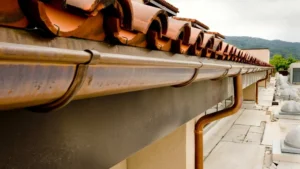
How Long Do Gutters Last in Georgia?
Home How Long Do Gutters Last in Georgia? Gutters are an important part of a home’s exterior drainage system. They...
Read More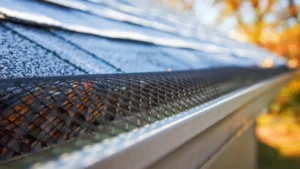
How to Choose the Right Gutters for Your Valdosta Home
Home How to Choose the Right Gutters for Your Valdosta Home Choosing gutters for your home is about more than...
Read More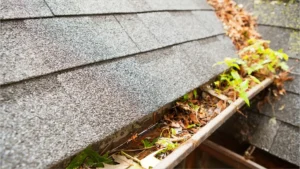
Signs Your Gutters Are Clogged: What Valdosta Homeowners Should Look For
Home Signs Your Gutters Are Clogged: What Valdosta Homeowners Should Look For Gutters are designed to collect rainwater from your...
Read More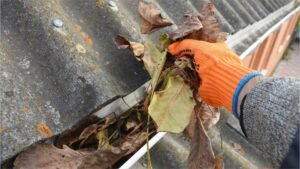
How Much Does Gutter Cleaning Cost in Valdosta, GA?
Home How Much Does Gutter Cleaning Cost in Valdosta, GA? If your gutters are filled with leaves, pine needles, dirt,...
Read More
Seamless Gutters vs. Regular Gutters: Which Is Better for Your Valdosta Home?
Home Seamless Gutters vs. Regular Gutters: Which Is Better for Your Valdosta Home? If you are planning a new gutter...
Read More
How Georgia Weather Affects Your Gutters
Home How Georgia Weather Affects Your Gutters Georgia weather can put a lot of stress on a home’s gutter system....
Read More
Gutter Installation vs. Gutter Replacement: What’s the Difference?
Home Gutter Installation vs. Gutter Replacement: What’s the Difference? If you are researching gutters for your Valdosta home, you may...
Read More